SC
Supreme Court Quashes Forgery Case Over Registered Will, Says Execution Proof Outweighs Expert Opinion
Abhishek Nagle • Published • 5 min read
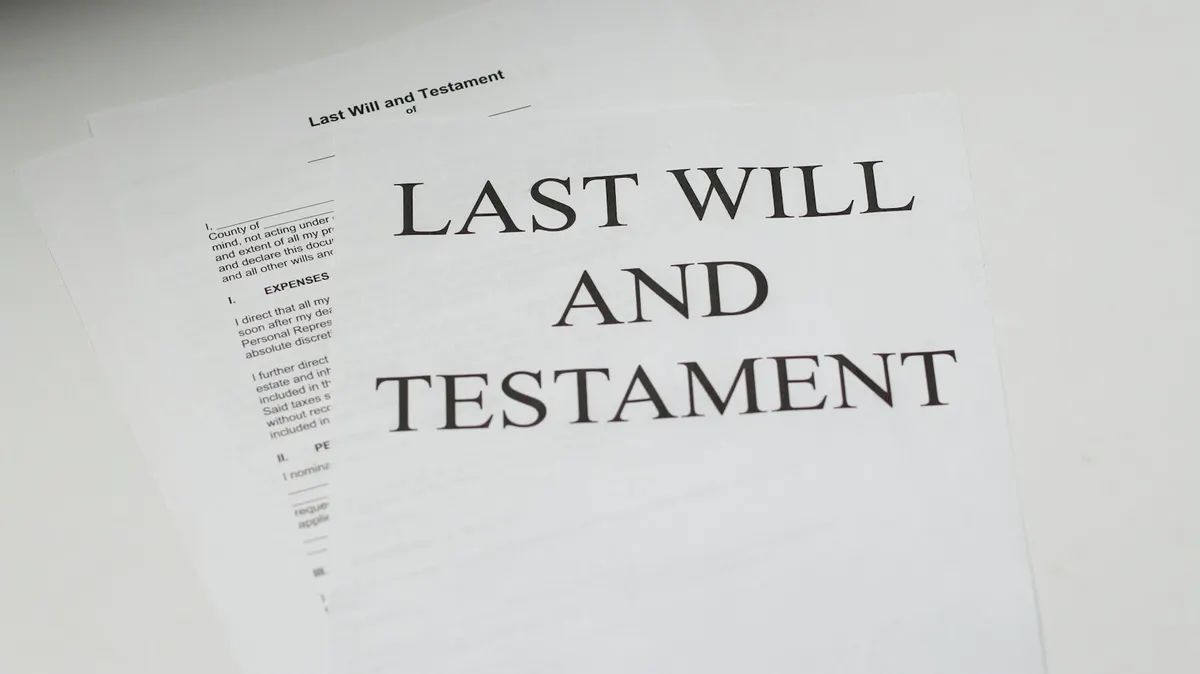
Key development: The Supreme Court has held that substantive proof of the execution of a document overrides a handwriting expert's opinion in deciding whether a document and its signature are genuine, and has quashed criminal proceedings begun over a registered Will while directing quick disposal of the probate case.
Criminal proceedings quashed; probate to be decided quickly
A Bench of Justice J.B. Pardiwala and Justice K. Vinod Chandran allowed the appeal in Babita Chopra v. State (GNCT of Delhi) & Anr. (2026 INSC 1258), reported on 24 November 2026. The appellant, a beneficiary of a Will made by her brother, had challenged an order that refused to quash the criminal proceedings started by the son of the Will's executant.
The Court held the criminal proceedings not sustainable and directed expeditious disposal of the probate proceedings. It added that even if the probate case ends in rejection, the prosecution would not be revived on these facts, particularly because one of the beneficiaries had died. This is a final judgment on the appeal.
Facts: a registered Will, a probate petition and a forgery complaint
The Will was said to have been executed on 29 April 2011 and registered on 4 May 2011. The executant died in 2013. The appellant and her mother, the joint beneficiaries, then filed a petition for probate. The executant's wife and son, who were left out of the Will, filed a reply and asked that the Will be sent to a handwriting expert because they alleged forgery.
The expert expressed suspicion and opined that the disputed signature was not written by the executant. The son then moved an application under Section 156(3) of the Code of Criminal Procedure, 1973, which led to a direction to register an FIR. A petition under Section 482 to quash the proceedings was refused by the High Court, and the matter reached the Supreme Court. The executant's mother and wife had died by then, leaving the aunt and the nephew as the contesting parties.
Substantive proof of execution outweighs expert opinion
The Court noted that the Will was registered, that the Registrar recorded that it was presented by the executant and that his left-hand thumb impression was affixed in his presence. Two attesting witnesses had signed and given thumb impressions at registration. During the investigation, one attesting witness told the police that the executant signed all pages of the Will in his presence.
The Court stated that the indubitable principle is that substantive proof of execution overrides expert opinion on handwriting when deciding the genuineness of a document and the signature on it. It said a handwriting expert's opinion cannot be viewed with suspicion, but its weight depends on the facts of each case.
Precedents and the rule of prudence
The Court observed that Syed Askari Hadi Ali Augustine Imam turns on its own facts. It relied on Sukhdev Singh for the rule of prudence that opinion evidence cannot take precedence over substantive evidence and should be corroborated before it is acted on. The neutral citations of both decisions are Not available in the verified source.
The Court also noted that the testator's mother, one of the beneficiaries, was no longer alive, so there was no way to find out whether any discrepancy in the signature, if proved to be a forgery, could be attributed to her or to the sister. It said the registration made at the time of execution, before two attesting witnesses, prima facie proves the document and its due execution, although that must be proved in the probate proceedings.
Relief and practical significance
The appeal was allowed and the criminal case stands quashed. The probate court will now decide whether the Will is genuine, and the Supreme Court asked that it do so expeditiously. The Court did not itself rule that the Will is valid.
For litigants in Will disputes, the ruling shows that a forgery allegation resting mainly on a handwriting report may not justify a criminal prosecution where registration and attesting witness evidence supports the Will. It also separates the civil question of genuineness, to be tried in probate, from the criminal route. The report does not mention the specific penal provisions invoked in the FIR, which are Not available in the verified source.
Why it matters for exams
Relevant for Judiciary, CLAT PG, APO, AIBE and UGC-NET Law aspirants studying evidence, succession and criminal procedure. Revision pointer: substantive proof of execution outweighs a handwriting expert's opinion, and expert evidence is a rule-of-prudence corroborative tool and not conclusive proof.
- Expert opinion on handwriting is not viewed with suspicion but needs corroboration.
- Registration of a Will and attestation by two witnesses is strong prima facie proof of execution.
- Section 156(3) CrPC lets a Magistrate direct registration of an FIR; Section 482 CrPC saves the High Court's inherent power to quash.
- Genuineness of a Will is finally decided in probate proceedings.
Case Details
Case: Babita Chopra v. State (GNCT of Delhi) & Anr.
Citation: 2026 INSC 1258
Bench: Justice J.B. Pardiwala and Justice K. Vinod Chandran
Advocates: Appellant: AOR K.K. Mohan; Respondents: Additional Solicitor General Davinder Pal Singh, AOR Shreekant Neelappa Terdal and others
Date: Reported 24 November 2026; date of judgment Not available in the verified source
Relevant Bare Act
Code of Criminal Procedure, 1973, Sections 156(3) and 482 (corresponding to Sections 175(3) and 528 of the Bharatiya Nagarik Suraksha Sanhita, 2023, given for reference; the report cites the 1973 Code).
- Supreme Court
- Will
- Handwriting Expert
- Probate
- Section 482 CrPC
- Section 156(3) CrPC