HC
Madras High Court Bars Calls to Defy Supreme Court's Thiruparankundram Lamp Order
Abhishek Nagle • Published • 4 min read
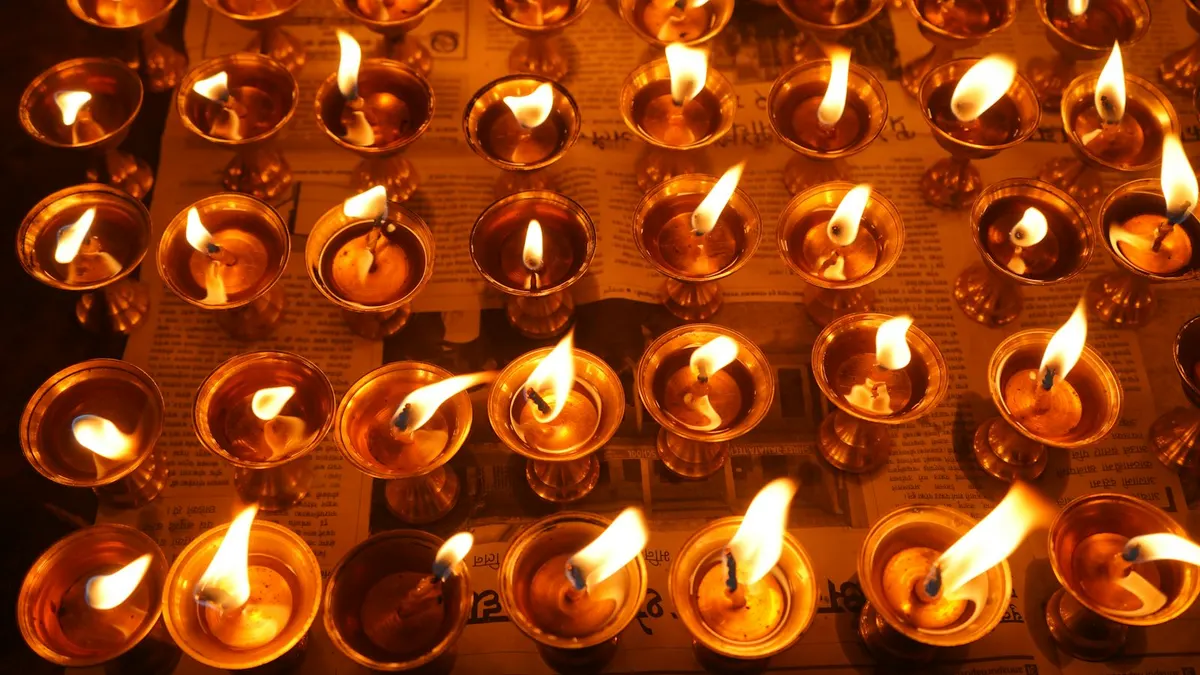
Key development: The Madras High Court has restrained members of the public from calling for defiance of the Supreme Court's 20 November 2026 order permitting a one-time lighting of the Karthigai lamp atop Thiruparankundram hill, while stating that the order can still be criticised, and has directed that the Collector's prohibitory order be applied in a way that preserves religious freedom.
Calls to defy the Supreme Court's order restrained
A Bench of Justice G.R. Swaminathan and Justice M.D. Sumathi of the Madurai Bench passed the order on 24 November 2026 while closing two petitions against a prohibitory order of the Madurai Collector. The Court said that even sharp or strident criticism of judicial directions is permissible, but that its order targets only calls to prevent implementation of the Supreme Court's 20 November order.
The report does not give a case number or citation for the High Court's order, and these are Not available in the verified source. The High Court disposed of the writ petitions before it, and its order does not decide the underlying dispute over the hill.
Background: the Supreme Court's 20 November order
The Supreme Court on 20 November 2026 stayed the Madras High Court's findings on the nature of a stone pillar and the land on which it stands. As an interim one-time measure, it allowed a temple-authorised team to light the Karthigai lamp at the pillar on 24 November 2026, barred the public from accompanying that team and directed that customary religious observances continue undisturbed.
A review petition filed by the Tamil Nadu Government against that order is pending in the Supreme Court. The hill houses both a temple and a mosque. The dispute traces back to a December 2025 High Court direction to light the lamp, which was not carried out last year.
Pending review is no excuse for non-compliance
The High Court held that a pending review petition does not excuse State authorities from complying with the Supreme Court's directions, and noted that the Supreme Court had passed no order on the review plea. District, police and temple officials therefore remain bound to implement the 20 November directions.
It added that Article 144 of the Constitution requires civil and judicial authorities to act in aid of the Supreme Court, so the Madurai Collector must act in aid of it, and must disregard any advice to flout those directions even if it comes from another authority. The Bench said it was not interpreting the Supreme Court's order and would not go beyond it.
Section 163 BNSS and freedom of religion
The petitions challenged a prohibitory order issued under Section 163 of the Bharatiya Nagarik Suraksha Sanhita, 2023 restricting gatherings and processions across Madurai district until 10 AM on 25 November. One petitioner said it would interfere with the customary full-moon walk around the hill, and another sought permission for devotees to watch the lamp lighting from public areas at the foot of the hill.
The High Court held that the Collector's order must be applied in a manner that preserves the freedom of religion under Article 25 of the Constitution, and expected the police to release without delay anyone unlawfully detained under it. The Court had earlier insisted that the Collector appear in person before it could hear the matter.
Relief and practical significance
No fresh relief on the merits was granted; the petitions were closed with the directions above. Counsel for the Collector told the Court that there was free movement in the temple, that around 250 individuals affiliated to some organisation had been detained under the Section 163 order and that two FIRs were registered. These are submissions made in Court and were not found proved by the Bench.
The order is a reminder that disputes over compliance with a Supreme Court order are for the Supreme Court itself, and that officials must not undercut it. It also shows that prohibitory orders under the new procedural code remain subject to constitutional rights. Whether the Supreme Court will decide the review petition soon is Not available in the verified source.
Why it matters for exams
Relevant for Judiciary, CLAT PG, APO, AIBE and UGC-NET Law aspirants studying constitutional law and criminal procedure. Revision pointer: Article 144 obliges authorities to act in aid of the Supreme Court, a pending review does not suspend its order, and Section 163 BNSS (formerly Section 144 CrPC) orders must respect Article 25.
- Article 144: civil and judicial authorities must act in aid of the Supreme Court.
- A review petition does not by itself stay or excuse compliance with the order under review.
- Section 163 BNSS corresponds to Section 144 CrPC, a power to prohibit assemblies to prevent disturbance.
- Article 25 protects freedom of religion, subject to public order, morality and health.
Case Details
Case: Petitions of J. Malai Raja and J. Jaaswant against the Madurai Collector's prohibitory order (case numbers: Not available in the verified source)
Citation: Not available in the verified source
Bench: Justice G.R. Swaminathan and Justice M.D. Sumathi, Madurai Bench of the Madras High Court
Advocates: Senior Advocate Gopal Sankaranarayanan for the Collector; other counsel: Not available in the verified source
Date: 24 November 2026
Relevant Bare Act
Constitution of India, Articles 25 and 144; Bharatiya Nagarik Suraksha Sanhita, 2023, Section 163 (corresponding to Section 144 of the Code of Criminal Procedure, 1973).
- Madras High Court
- Article 144
- Article 25
- Section 163 BNSS
- Thiruparankundram
- Prohibitory Order