SC
Supreme Court Reserves Verdict on Drug Pricing PIL After Questioning Extreme Hospital Medicine Mark-Ups
Nyaya Prep • Published • 3 min read
Background and the questions before the Court
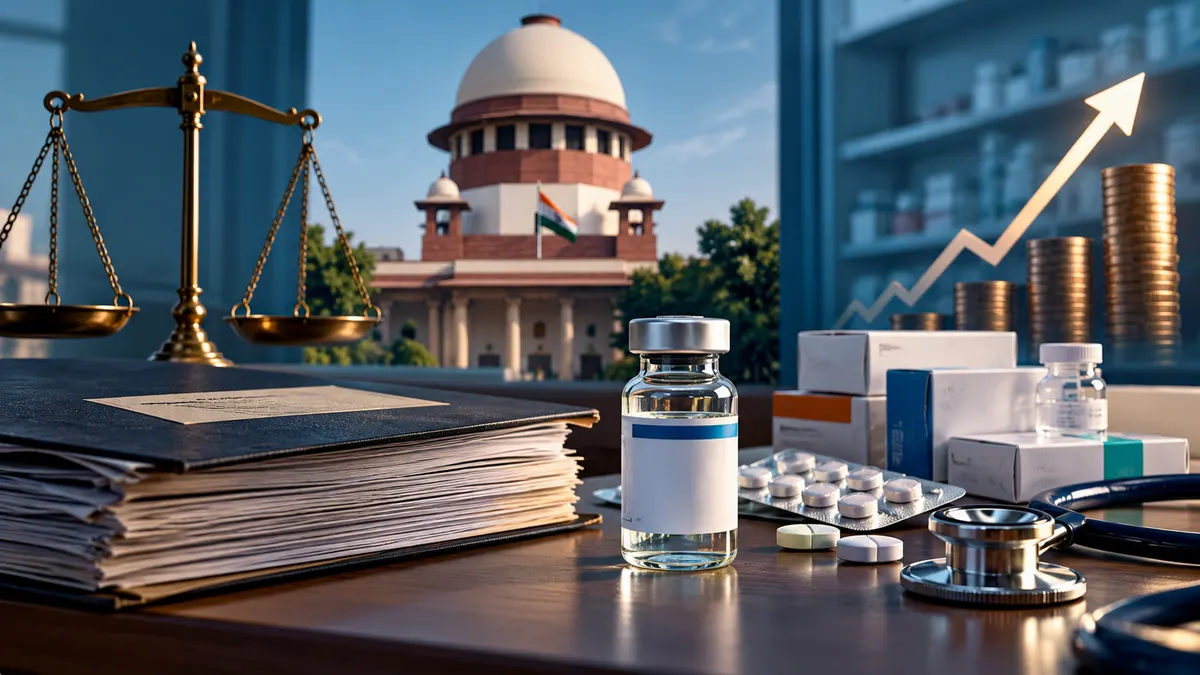
The petition, brought by advocate Kishan Chand Jain, raises the pricing of non-scheduled medicines, medical devices and consumables used in treatment. It also seeks measures concerning generic prescriptions and the manner in which price regulation operates under the Drug Prices Control Order framework. The case addresses a practical problem: patients undergoing urgent treatment frequently cannot compare suppliers or negotiate the cost of medicines administered inside hospitals. The petition asks whether existing price controls sufficiently respond to that imbalance.
The distinction between scheduled and non-scheduled products is important. Price ceilings apply to medicines covered by the relevant regulatory mechanism, while trade margins and final billing practices can raise different questions for products outside it. The Court's discussion did not amount to a finding that every private hospital engages in unlawful pricing. It focused on whether large margins can be justified when a patient depends on immediate medical care and has little practical bargaining power.
Arguments and observations during the hearing
The Bench referred to an example placed in discussion involving a chemotherapy injection reportedly available to a dealer for about ₹11,000 but billed by a hospital at approximately ₹1,30,000. It also questioned the pricing of ordinary consumables and the difference between wholesale acquisition costs and maximum retail prices. These examples were raised in the course of oral proceedings; they should not be treated as findings establishing misconduct by any identified hospital. The judges asked the government to explain why substantial mark-ups remain possible.
Additional Solicitor General Aishwarya Bhati stated that the government was adjusting its policies. Senior Advocate Mukul Rohatgi, appearing for private hospitals, argued that hospitals must finance continuously available infrastructure and that stringent restrictions on margins could undermine their operations. The Bench was unconvinced that infrastructure costs alone answered the concern about individual medicine charges. Importantly, the competing submissions are arguments, while the Court's comments are observations made before judgment.
Why the case matters
The eventual judgment could clarify the extent to which pricing policy must account for the patient's position rather than treating medicine sales as ordinary commercial transactions. Hospitals bear costs that a retail pharmacy may not, but the legal issue is whether the method and size of the margin are transparent and proportionate. That question intersects with public health, consumer protection and executive discretion in pharmaceutical price regulation. A policy response would also need to consider supply incentives and access to treatment.
For law students, the case illustrates the difference between judicial scrutiny of executive policy and judicial creation of a pricing schedule. A court may require a regulator to justify its choices, examine whether statutory powers have been exercised lawfully and evaluate constitutional arguments. It does not follow that a judge's strong language at a hearing automatically changes the legal obligations of hospitals. The precise operative rule, if any, will be known only after the signed judgment is delivered.
What happens next
The Supreme Court has reserved judgment. No date for pronouncement was verified in the accessible report. Until a final order is available, hospitals, manufacturers, patients and regulators should not assume that the hearing itself has established a fresh nationwide cap. The decision will be significant for understanding the relationship between the Drug Prices Control Order, the pricing of non-scheduled products and the State's responsibility to address affordability in healthcare.
Important legal principles
- No final price ceiling was imposed during the reported hearing.
- The remarks about mark-ups were oral judicial observations, not the operative judgment.
Case details
Case name: Kishan Chand Jain v. Ethics and Medical Registration Board and Others
Court: Supreme Court of India
Bench: Justices Vikram Nath and Sandeep Mehta
- Supreme Court
- Drug Pricing
- Healthcare
- Medical Consumables
- Drug Price Control Order