SC
Supreme Court Requires Magistrate Approval Before Re-Arrest After Illegal Arrest
Nyayavat • Published • Updated • 3 min read
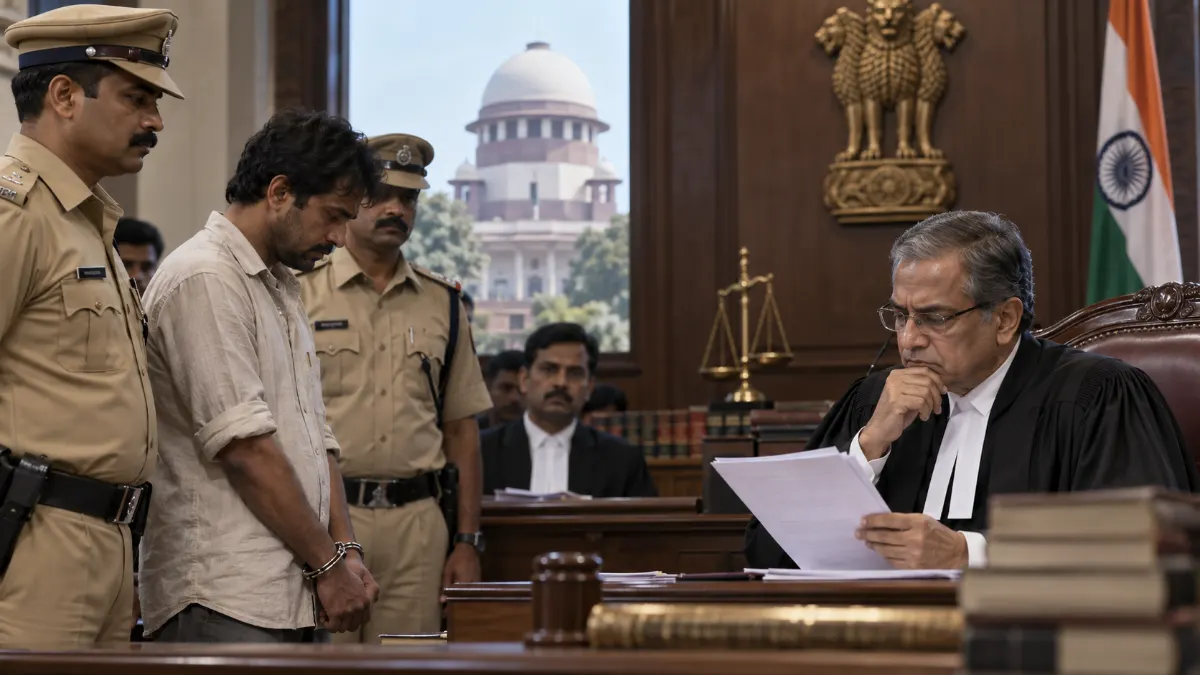
The Supreme Court has held that police cannot simply re-arrest an accused after an earlier arrest is declared illegal for failure to furnish the grounds of arrest as required by Article 22(1) of the Constitution.
Why the Court intervened
The Bench treated the right to be informed of the grounds of arrest as a fundamental constitutional protection, not a technical requirement tied to any particular statute. It clarified that an accused need not separately prove prejudice once a breach of Article 22(1) is established.
The Court built on its earlier ruling in Mihir Rajesh Shah v State of Maharashtra and addressed the procedure to be followed when the investigating agency still considers custody necessary after the first arrest has been invalidated.
Safeguards for any fresh arrest
Before seeking re-arrest, the investigating agency must furnish the grounds of arrest in writing. It must then move the jurisdictional Judicial Magistrate through an application explaining why the grounds were not supplied at the first instance.
The application must be endorsed by the immediate superior of the officer responsible for the earlier arrest. The superior authority must also transfer the investigation to another officer. The Magistrate may permit re-arrest only on being satisfied that the earlier lapse occurred for bona fide reasons and that renewed custody is genuinely required.
Departmental consequence and practical effect
The Supreme Court further directed initiation of departmental proceedings against the police officer responsible for the constitutional violation. An adverse departmental finding may result in disciplinary action and an entry in the officer's service record.
The Court clarified that release following invalidation of an arrest for breach of Article 22(1) is not equivalent to release on bail. The judgment therefore creates a separate judicially supervised route for any subsequent arrest.
Bench: Justice Ujjal Bhuyan and Justice Atul S. Chandurkar
Source: Read source report
- Supreme Court
- Article 22(1)
- Arrest
- Re-Arrest
- Fundamental Rights