Supreme Court Proceedings
Supreme Court Agrees to Hear Azam Khan’s Challenge to Fresh ED Arrest
Nyaya Prep • Published • 4 min read
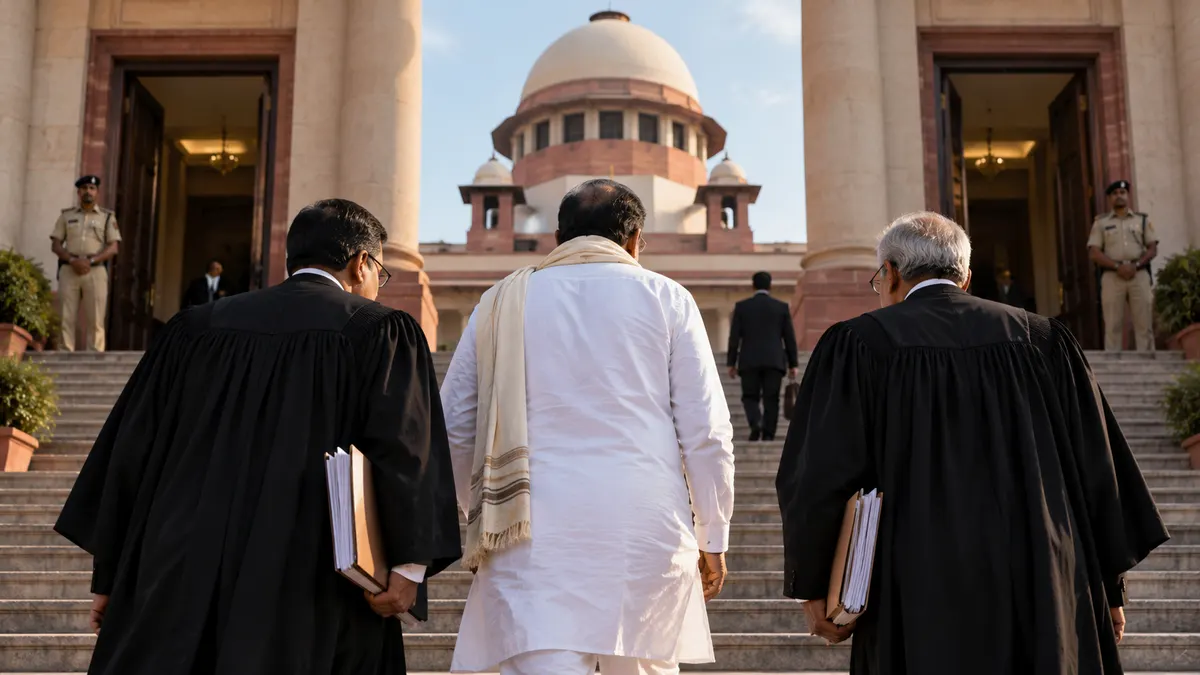
What happened at the Supreme Court
Former Uttar Pradesh minister and Samajwadi Party leader Mohammad Azam Khan has approached the Supreme Court to challenge his arrest by the Enforcement Directorate. The plea was mentioned before Chief Justice of India Surya Kant, who agreed to hear the matter during the week of 2 November 2026. The Court did not decide the merits of the arrest challenge at the mention. It did not grant bail, set aside the ED action or order release. A listing assurance means the petition is expected to be placed before an appropriate bench for consideration. The distinction is essential because the reported development is a new procedural step in litigation, not a final decision about Khan's custody.
The two separate cases
Khan and his son Abdullah Azam had obtained relief from the Allahabad High Court in a case concerning dual PAN cards. The High Court suspended Khan's 10-year sentence while declining to stay his conviction, according to the inspected account. They were released from Rampur jail on 31 October. The ED then detained Khan in connection with a different money-laundering investigation concerning alleged irregularities associated with Mohammad Ali Jauhar University. A special court under the Prevention of Money Laundering Act remanded him to judicial custody on 1 November. His Supreme Court plea concerns that later ED arrest. It does not automatically reopen or overturn the orders in the dual PAN card case.
Background of the ED investigation
The ED's case is described as arising from allegations that agricultural land belonging to farmers was forcibly taken for the university. The agency relied on a group of first information reports registered by Uttar Pradesh Police in 2019 as predicate material for its money-laundering investigation. Those allegations are not findings of guilt. The criminal and PMLA processes have their own elements and evidentiary requirements. The Supreme Court will need to consider the grounds raised in Khan's petition and the agency's response before making any ruling on the arrest. The public report of a mention does not disclose the complete petition, arrest memo or remand order for independent examination in this review.
Why timing is central to the challenge
The sequence has attracted attention because the ED action followed Khan's release from jail in another matter. Temporal proximity may be relevant to arguments made by the parties, but it does not by itself establish that a fresh arrest is unlawful. An enforcement agency can act in a distinct case if statutory conditions are satisfied. Conversely, the agency's assertion that the investigation is separate does not dispense with the legal safeguards governing arrest, communication of grounds and judicial remand. The reported Supreme Court petition seeks scrutiny of the new custody. Until the Court hears both sides, the reason for and legality of the timing remain contested, and a news article should not announce a finding the Court has not made.
The immediate legal position
After the special PMLA court's remand on 1 November, Khan remained in judicial custody in the ED case as described by the inspected report. The Chief Justice's response to counsel Nizam Pasha's mention creates an expectation of a hearing, not a change in that custody order. The subsequent bench may seek the ED's response, examine the arrest materials, consider interim relief or pass another procedural direction. None of those possible steps should be treated as already ordered. The dual PAN card sentence suspension and the ED remand are separate legal events with different consequences. Any future update should identify which case an order concerns before stating that Khan has been released or detained.
What to watch at the hearing
The issues likely to matter are those actually pleaded about the arrest and supported by the official records, including the authority invoked, the grounds communicated and the basis for seeking custody. The present report does not establish the petition's full grounds or the ED's reply, so this article does not speculate about their precise content. It records a limited but significant procedural development: access to an imminent Supreme Court hearing on a fresh arrest following release in another proceeding. Readers should await an operative order before drawing conclusions about bail, the validity of the ED action or the merits of the alleged university-related financial offences.
Case Details
Mohammad Azam Khan's Supreme Court petition challenging his Enforcement Directorate arrest; mentioned before Chief Justice Surya Kant on 2 November 2026 through counsel Nizam Pasha. The inspected reports did not provide a verified Supreme Court case number or bench assigned for the substantive hearing.
Relevant Bare Act
Prevention of Money Laundering Act, 2002, governing the separate ED investigation and special-court remand. The specific provisions invoked in the arrest challenge were not available in the inspected reports, so no section number is attributed here.
- Supreme Court
- Azam Khan
- Enforcement Directorate
- PMLA
- Arrest
- Bail