High Court Judgments
Punjab and Haryana High Court Orders Recruitment Test Video Disclosure Without Prior Proof of Irregularity
Nyaya Prep • Published • Updated • 4 min read
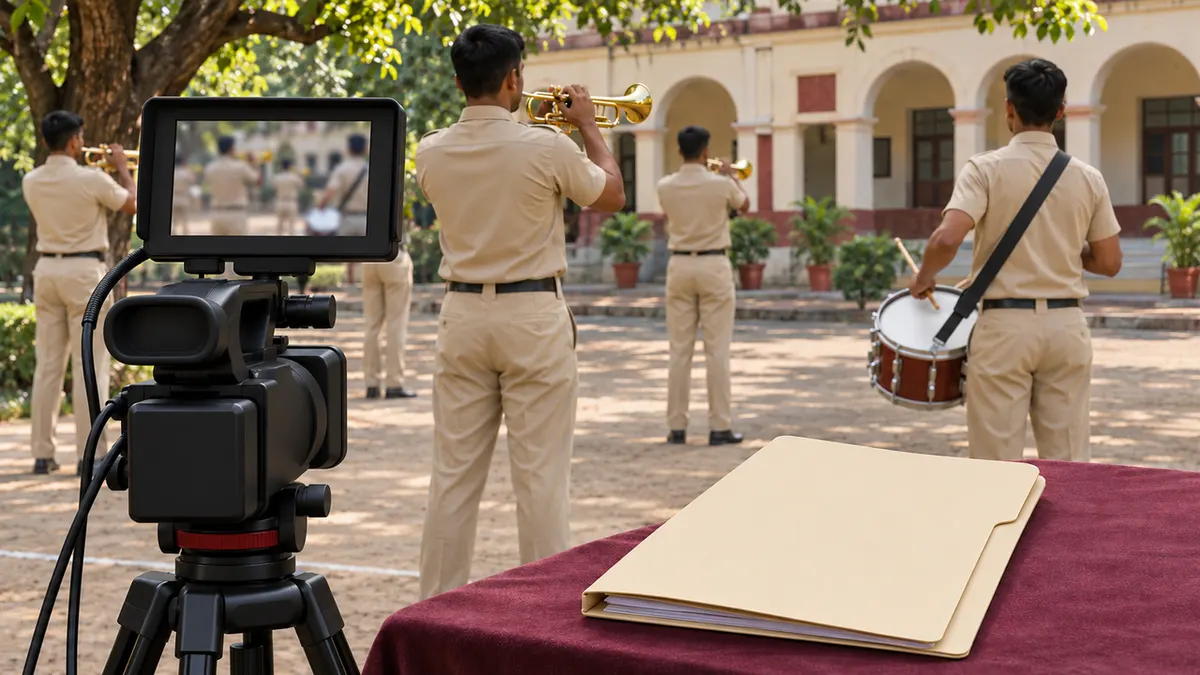
Recruitment recording must be disclosed
The Punjab and Haryana High Court has directed authorities to provide the videography of a police recruitment Band Skill Test to a candidate who questioned his assessment. Justice Kirti Singh allowed Sunder Lal’s writ petition on 3 November 2026, rejecting the proposition that he first had to demonstrate wrongdoing before receiving the record sought to examine the selection process.
The Court set aside the State Information Commission’s order only to the extent that it refused this recording. The authorities were directed to furnish the information within thirty days. The decision concerns access to the recruitment record; it does not itself cancel the appointment of the selected candidate or substitute a new assessment of musical proficiency.
Why the skill-test recording mattered
Lal had applied for the post of Bandsman (Constable) in Haryana Police under an advertisement issued in November 2022. He cleared the Knowledge Test and Physical Screening Test but was not selected against the relevant advertised post. The Band Skill Test was recorded and carried sixty marks out of the total hundred, making it the selection component with the greatest weight.
The marks subsequently placed before the Court showed that Lal and the selected candidate each obtained 13.6 in the Knowledge Test. Lal received twenty-two in the Band Skill Test, while the selected candidate obtained forty. Their final scores were 38.6 and 53.6 respectively. The Court considered the recording directly relevant because the substantial difference arose in the assessment that it documented.
How the information request was refused
The petitioner’s RTI application sought material concerning the relevant category’s candidates, including answer sheets, marks and videography. The public information officer declined disclosure on the ground that the information concerned other applicants and fell under Section 8(1)(j) of the Right to Information Act, 2005. The first appeal was decided on the same basis.
The State Information Commission directed release of marks but refused the recording, reasoning that no material established malice or a prima facie subversion of the assessment. That condition was central to the High Court challenge. Lal argued that the recording was a contemporaneous public recruitment record and that access was needed to examine, rather than already prove, unfairness.
Public assessment and the exemption claimed
The Court drew on decisions concerning disclosure of qualifications, experience and evaluated answer sheets in public employment. It explained that a direct relationship to recruitment could not be answered simply by describing information as personal. The authority needed to examine what was being requested and whether the statutory exemption actually justified withholding it.
The recording here was not an unrelated private document. It captured assessment by a public authority for recruitment to public posts. The mere presence of other candidates’ performances did not, by itself, justify refusing the entire information to an unsuccessful participant seeking a record directly bearing on selection. The reasoning remains tied to the nature and relevance of this particular material.
Proof of irregularity cannot precede access
The High Court rejected the Commission’s demand that the applicant first establish prima facie malice or manipulation. Such a requirement would defeat the purpose of seeking the record: the information was requested precisely to examine whether the assessment was fair. Transparency and accountability carried particular significance where the record directly concerned evaluation of candidates for public employment.
The State also pointed out that Lal applied for Bass Drum and the selected candidate for Bb Clarinet, though both were in the Brass Band category. The Court noted this distinction but held that it did not resolve whether the recording was exempt. It was not deciding comparative proficiency, the correct marks for either performance or the ultimate legality of the selection.
The operative relief and its limits
The writ petition was allowed and pending miscellaneous applications were disposed of. The thirty-day disclosure direction runs from the decision; whether the authorities have since complied requires separate verification. No compliance or delivery of the recording is assumed in this report.
The ruling gives the petitioner access to the existing assessment record. Any further challenge based on that record remains a separate matter. It should therefore be read as a decision against the reasons offered for withholding recruitment videography, rather than an announcement that the recruitment was fraudulent or that every record containing third-party information must always be disclosed.
Case Details
Case: Sunder Lal v. State of Haryana and others; CWP No. 12474 of 2026 (O&M)
Citation: 2026:PHHC:197042
Bench: Justice Kirti Singh, Punjab and Haryana High Court
Decision: 3 November 2026
Advocates: Animesh Sharma with Ishita Khanna for the petitioner; Saumya Ahluwalia, Senior Deputy Advocate General, Haryana, for the respondents.
Relevant Bare Act
Right to Information Act, 2005: Section 8(1)(j), the personal-information exemption relied on in refusing the request and considered by the Court. Constitution of India: Articles 226 and 227, the writ and supervisory jurisdiction invoked.
Source: verdictum.in
- Punjab and Haryana High Court; RTI; Public recruitment; Transparency