High Court and Intellectual Property
Patent Office Reportedly Reconsiders Scientist’s In-Vivo Power Application After Bombay High Court Order
Nyaya Prep • Published • 4 min read
The reported administrative step
A 2 November 2026 account reports that the Indian Patent Office acted on a Bombay High Court direction in scientist Tarkeshwar Chandrakant Patil's dispute over an in-vivo power-generation invention. According to that account, an Assistant Controller on 30 October substituted Patil as the sole applicant and inventor on the Indian application, set aside a 2025 rejection and rejected remaining inventive-step objections. The original Controller decision and the current Indian patent-register entry were not independently accessible during this review. The development must therefore be stated with that evidentiary limit. The report's description of approval does not, without the official register, independently establish a granted and recorded Indian patent.
The invention and original application
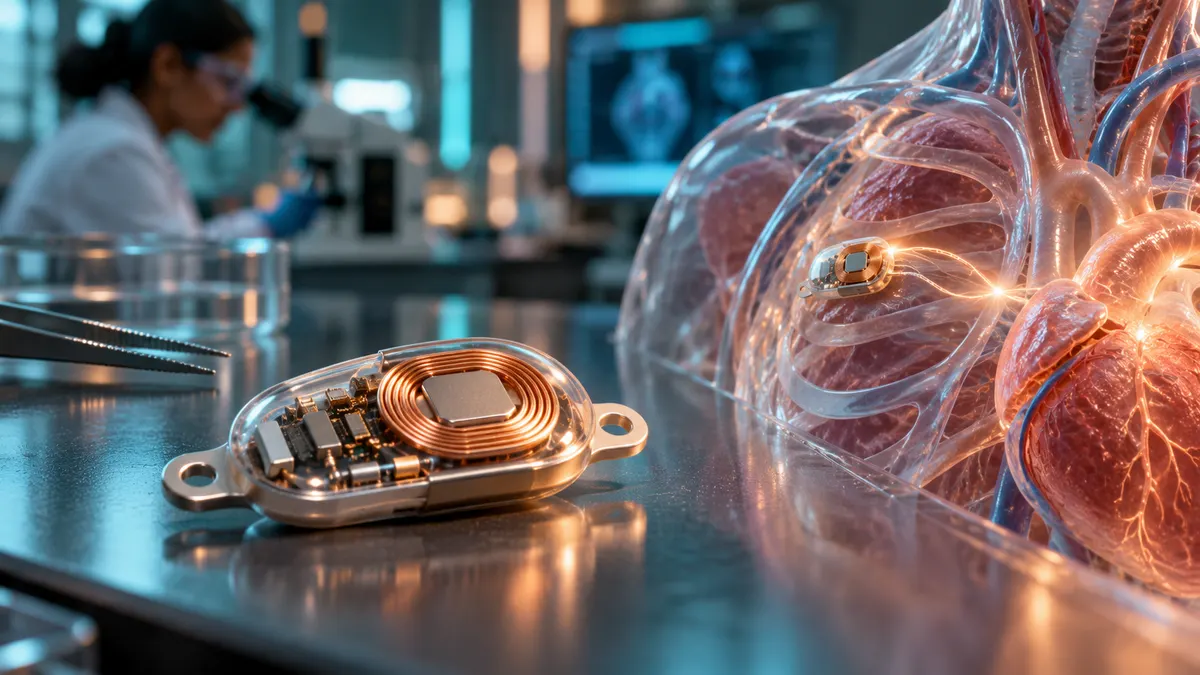
The technology concerns generating electrical power inside the body to sustain implanted medical devices. The application describes a method that uses a fuel generator and biofuel cell to convert materials available in body fluid into an electrical source. Its potential attraction is to reduce reliance on replacement of conventional implanted batteries, but a patent decision does not by itself prove clinical safety, commercial readiness or medical effectiveness. The Indian application, identified in public patent material as 2808/MUM/2013, was filed in August 2013 with IIT Bombay as applicant and Patil named as an inventor. Patent filings concerning related technology also exist outside India. Those foreign records should not be confused with the status of this particular Indian application.
The assignment and court dispute
Patil and IIT Bombay later disagreed over the rights to pursue the invention. A 2017 assignment deed transferred intellectual-property interests to Patil, according to the Bombay High Court's September 2026 judgment. Yet the Indian application remained mired in administrative and litigation steps for years. The Controller ultimately rejected it in 2025. The High Court found that the assignment and Patil's position as applicant required proper recognition and that the rejection could not stand on the reasoning given. It restored the application for a fresh merits decision by the patent authority within a stated period. The judgment clarified who should pursue the application, but it did not itself issue a patent certificate or complete the Controller's technical examination.
What the October account claims
The newly published account says the Assistant Controller implemented the High Court's direction on 30 October, recognised Patil as the sole applicant and inventor, displaced the prior rejection and dismissed technical objections about inventive step. If the underlying order bears out that account, it represents a significant advance in a dispute that began more than a decade earlier. The exact operative wording still matters. A decision allowing an application, an amendment to the applicant record, issuance of a patent number and publication of a grant may occur at distinct stages. Because the primary October decision and live register entry were unavailable for inspection, this report does not collapse those steps into a verified assertion of completed registration.
Why the legal distinction matters
Inventor status, applicant status and ownership rights are related but not interchangeable. An inventor is credited with creating the invention; an applicant seeks the statutory right; an assignee may acquire rights through a valid transfer. The Bombay High Court's intervention addressed the effect of the assignment and the handling of the application. Patentability requires the Controller to apply statutory technical criteria to the claims. The reported October action concerns that administrative stage. Anyone relying on a patent for licensing, enforcement or investment would need the official file history and current register entry to identify the precise scope and status of protection. Public reporting should be equally careful about describing what has actually been verified.
The position after this report
The confirmed judicial record establishes that the Bombay High Court directed a fresh decision treating Patil in accordance with the assignment and its findings. The 2 November report describes a subsequent Controller action dated 30 October, but its source document was not independently obtained in this review. There is therefore a clear reason to follow the official Patent Office record for the application number and any grant particulars. The dispute illustrates how delay over the identity of the person entitled to apply can stall consideration of an invention's merits. It also shows why a court victory over applicant rights should be distinguished from the final administrative status of the patent claims.
Case Details
Dr Tarkeshwar Chandrakant Patil v. Indian Institute of Technology Bombay and others, Bombay High Court judgment dated 8 September 2026; Indian patent application 2808/MUM/2013. The reported Patent Office action is dated 30 October 2026, but its decision number and current grant status were not independently verified.
Relevant Bare Act
Patents Act, 1970, governing patent applications, inventorship, assignment and examination. The specific provision applied in the reported 30 October Controller decision was not independently confirmed, so no section number is assigned to that decision.
- Bombay High Court
- Patent Office
- IIT Bombay
- Inventor Rights
- Medical Technology