HC
Kerala High Court Quashes Film-Financing Cheating and Forgery Cases Following Settlement
Nyaya Prep • Published • Updated • 4 min read
The Court’s order and the parties
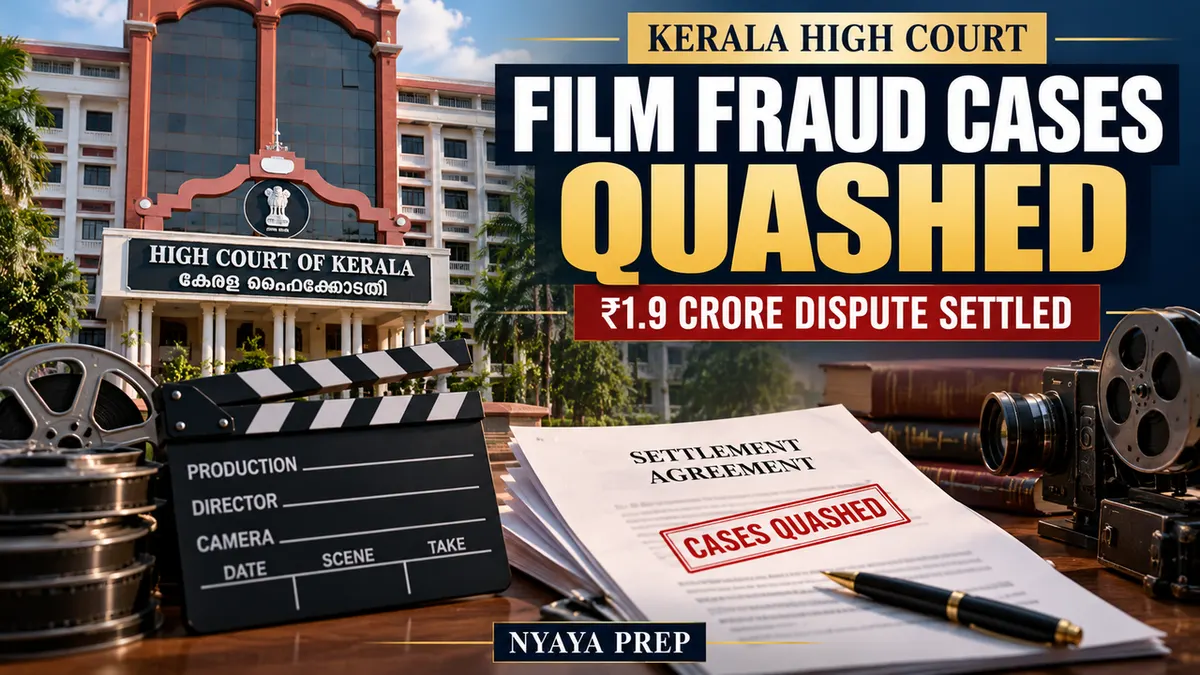
Justice P.V. Balakrishnan allowed criminal miscellaneous proceedings connected with allegations surrounding the proposed film Action Hero Biju 2. The Court’s order dated 26 October 2026 in Abrid Shine v State of Kerala, Crl.M.C. No. 7170 of 2025, records the quashing of Crime No. 808 of 2025 registered at Thalayolaparambu Police Station, Kottayam, against the petitioner. Related proceedings involving actor Nivin Pauly and producer P.S. Shamnas were also reported as having been quashed following the parties’ settlement.
The legal basis was Section 528 of the Bharatiya Nagarik Suraksha Sanhita, 2023, which preserves the High Court’s inherent powers. The order did not determine which side was factually correct about the disputed film rights. It assessed whether continuing the criminal prosecution served a legitimate purpose after a verified compromise.
How the film dispute became criminal litigation
Shamnas had alleged that he invested approximately ₹1.9 crore in a proposed sequel project after discussions concerning producer rights and a share of revenue. He alleged that arrangements relating to the film title and overseas rights were subsequently handled without the promised consent. These allegations led to a case involving Sections 406 and 420 read with Section 34 of the Indian Penal Code.
Pauly, in turn, alleged that his signature had been forged in documents submitted to a film-industry body, leading to a separate police case against Shamnas. These were rival allegations, not findings of guilt. Earlier proceedings had already produced interim protection in the High Court before the parties sought final quashing based on settlement.
Why the settlement mattered
The Abrid Shine order records that both sides told the Court the dispute had been amicably resolved. The complainant furnished an affidavit confirming the absence of a subsisting grievance and unwillingness to pursue the prosecution. The public prosecutor, acting on instructions, accepted the settlement as genuine and bona fide and conveyed that the State did not object to quashing.
The judge considered the nature of the allegations and concluded that the offences in the case did not have a serious societal impact warranting continued prosecution despite the compromise. The order also referred to the bleak likelihood of conviction in the changed circumstances and the waste of judicial time that a purposeless trial would entail. The finding was made on the particular record.
Legal boundaries of compromise-based quashing
The decision does not mean that private settlement automatically extinguishes every criminal offence. High Courts must consider the character of the allegations, public interest, gravity and the effect of compromise on the administration of justice. The inherent power is distinct from ordinary statutory compounding and must be exercised judicially.
This case arose from a commercial and interpersonal dispute connected with film financing. The Court regarded the complainant’s affidavit, the State’s position and the nature of the alleged offences as material. Allegations involving serious violence, systemic corruption or grave public consequences may require a different analysis even if individual parties express willingness to compromise.
Outcome and significance
The High Court quashed the relevant FIR and connected proceedings as reported. The result ends those prosecutions to the extent covered by the respective orders; it is not a declaration that the disputed financial representations were proved true or false. The parties’ civil or contractual rights, if any, are a different question and were not adjudicated in the quashing order.
The development illustrates how a court may prevent continuation of criminal litigation after a bona fide private settlement while preserving scrutiny of public interest. For legal readers, the important distinction is between termination of proceedings on compromise and a merits-based acquittal after trial.
For parties to commercial disputes, the decision is a reminder that a criminal complaint and a contract dispute may overlap without being identical. The High Court examined the compromise because the prosecution's continuation had become unnecessary in the specific circumstances. It did not undertake a trial of the disputed promises or decide ownership of the film's overseas rights, matters which would require separate legal analysis if pursued.
- Kerala High Court
- Nivin Pauly
- Abrid Shine
- Settlement
- Criminal Quashing