Legal Profession
Kerala High Court Designates 18 Senior Advocates Through Two Full Court Notifications
Nyaya Prep • Published • Updated • 4 min read
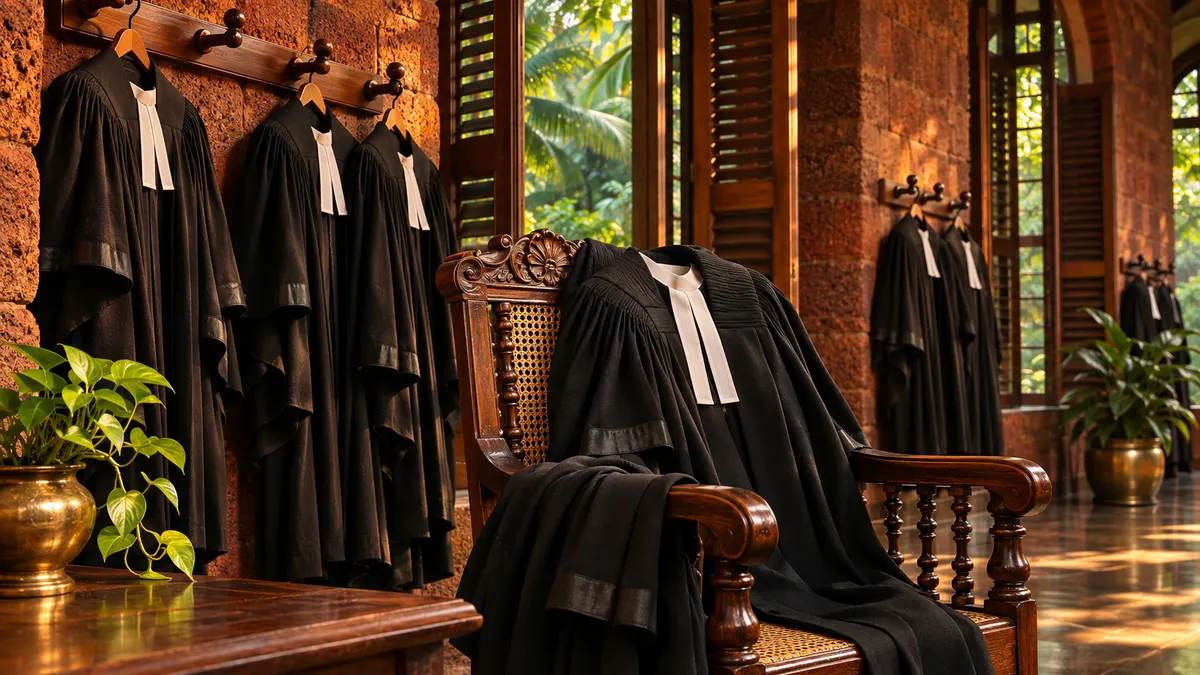
Two notifications, one Full Court meeting
The Kerala High Court has conferred Senior Advocate designation on eighteen advocates through two administrative notifications issued on 13 November 2026. Both record decisions taken at the Full Court meeting of 11 November and give the designations effect from that date. One notification covers seventeen advocates. The other separately records the designation of P.S. Sreedharan Pillai by consensus. Taken together, the documents establish the overall number while preserving the distinction between the procedures used.
The seventeen advocates named
The principal notification identifies K.T. Thomas, Asok Mamen Cherian, Raghavendra Subraya Kalkura, Gopikrishnan Nambiar M., M.P. Asoke Kumar, P. Ramakrishnan, Dr. Babu Karukapadath, A. Balagopalan and John Varghese. It also names Manoj Kumar N., S. Rajeev, John Sebastian Ralph V., Syam Kumar C.R., Sreekumar G. (Chelur), Vinod Bhat S., P.A. Mohammed Shah and Hari Kumar G. These names follow the notification’s spelling rather than variations appearing in secondary accounts. The document also records their enrolment particulars.
The statutory basis of designation
The notification expressly invokes Section 16(2) of the Advocates Act, 1961, read with Rules 2 and 3(1) of the High Court of Kerala (Designation of Senior Advocates) Rules, 2026. Those references matter because the decision is an exercise of the Court’s professional-designation power. It does not appoint the advocates as judges or confer an executive office. The operative event is the Full Court’s resolution, communicated through the Registrar General’s notification, rather than a judgment deciding a dispute between opposing litigants.
A separate consensus decision
The second notification invokes Section 16(2) together with Rules 2 and 3(2) of the same designation rules. It records that the Chief Justice and the High Court’s judges decided by consensus to confer the designation on Sreedharan Pillai. The distinction is procedural: the seventeen other advocates had applied for consideration, whereas this designation was conferred on the Court’s own initiative. Reporting both documents as one development avoids suggesting that the separately announced designation was outside the total announced on the day.
Professional recognition and its limits
The consensus route under Rule 3(2) concerns the Court’s assessment of exceptional professional quality, eminence and special expertise in law. The announcement should therefore be understood within the statutory designation framework. It does not decide a pending case, endorse a legal submission or record findings about any client’s rights. Nor do the notifications provide a comparative assessment of every advocate who may have sought recognition. Their public legal effect is the conferral of the specified professional status on the named advocates.
Why the dates and documents matter
The meeting date, notification date and effective date serve different purposes. The Full Court took the decisions on 11 November; the administrative communications followed on 13 November; and both communications expressly made the recognition effective from 11 November. Keeping those dates distinct prevents the later publication from being mistaken for a second round of designations. The documents also identify separate reference numbers, enabling the seventeen-name decision and the individual consensus decision to be traced without merging their legal bases.
The resulting position
The immediate result is eighteen newly designated Senior Advocates under the two notifications. The announcement is a material legal-profession development because it formally changes the professional status of the named practitioners. Its significance rests on the Full Court’s exercise of the designation power and the use of the Court’s 2026 rules. There is no adversarial case citation, trial bench or operative direction to a government department to add to the account. The notifications themselves supply the controlling particulars of the designations.
Case Details
Case: Administrative designation of Senior Advocates; notifications HCKL/3022/2026/D1-2(1) and D1-2(2)
Citation: Administrative notifications dated 13 November 2026; no judicial neutral citation
Bench: Full Court of the Kerala High Court
Decision: Full Court decision 11 November 2026; notifications issued 13 November 2026
Advocates: Not an adversarial proceeding; counsel appearances are not applicable.
Relevant Bare Act
Advocates Act, 1961: Section 16(2), designation as Senior Advocate. High Court of Kerala (Designation of Senior Advocates) Rules, 2026: Rules 2 and 3(1) for the seventeen-advocate notification; Rules 2 and 3(2) for the separate consensus designation.
- Senior Advocates; Kerala High Court; Advocates Act; Full Court