HC
Bombay High Court Quashes Road-Protest Case, Requires Evidence of Unlawful Conduct
Nyaya Prep • Published • Updated • 4 min read
Relief confined to the applicant
The Nagpur Bench of the Bombay High Court has quashed criminal proceedings against Nishkarsh Kiran Nimgade arising from an agitation over road conditions in Chandrapur district. Justice M.W. Chandwani held that the material did not disclose the alleged offences against him and that continuing the prosecution would abuse the court's process. The judgment was pronounced on 29 October 2026 and reported on 13 November. The relief applies to the applicant. It does not decide the liability of every person present at the gathering or authorise obstruction or violence during a protest.
Accident prompted residents to gather
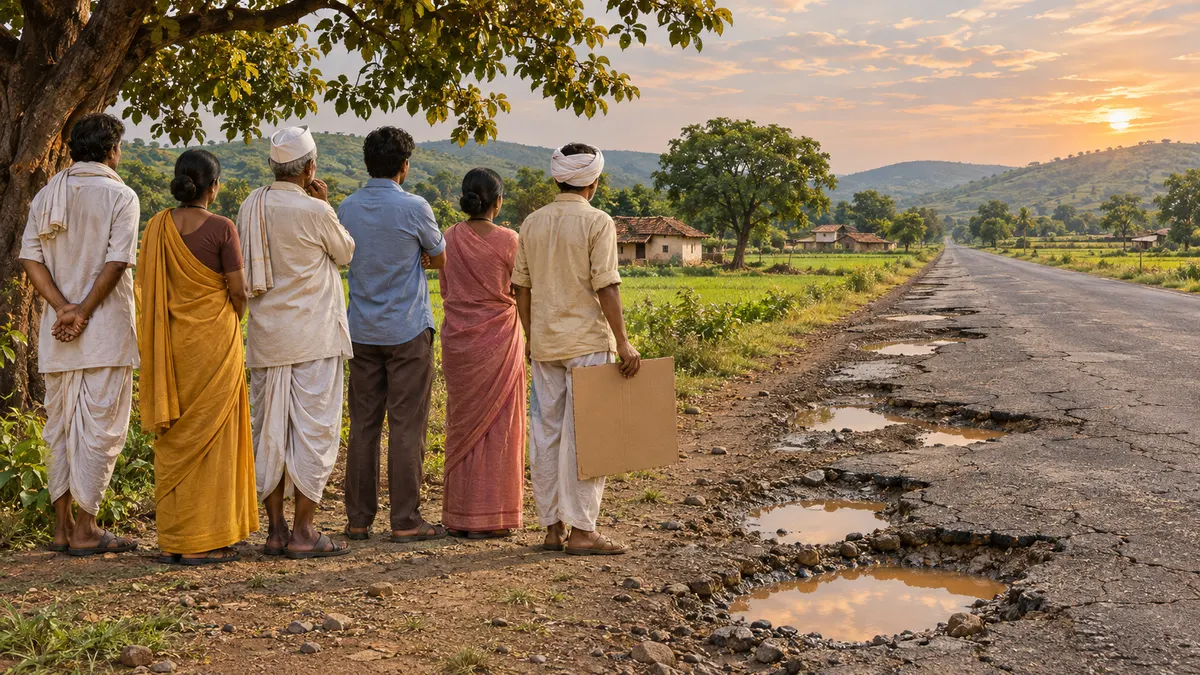
The prosecution described an incident on 21 January 2026 when a pickup vehicle struck an electricity pole and overturned near Nandgaon, injuring passengers. Residents gathered and demanded action against Public Works Department officials and the road contractor. It was alleged that a rope was tied across the road and that traffic was obstructed. Police registered the FIR the following day. The case invoked provisions of the Bharatiya Nyaya Sanhita relating to restraint, unlawful assembly and allied offences, along with provisions of the Maharashtra Police Act and the Criminal Law Amendment legislation.
Evidence did not establish wrongful restraint
The High Court examined whether the charge-sheet material supported the allegation of wrongful restraint. It found no evidence identifying who had been prevented from proceeding along the road. The FIR also described distinct stages of the incident. The applicant's name appeared after the police had removed the earlier gathering, rather than in the initial account of alleged obstruction. The Court found no material showing that he belonged to the assembly when commuters were allegedly restrained. That gap mattered because the prosecution needed to establish the conduct and the applicant's connection to it, rather than rely on his later presence.
Numbers alone do not make an assembly unlawful
The Bench explained that an unlawful assembly requires the common object specified in the relevant penal provision. A sizeable gathering expressing anger about road conditions and demanding action against officials cannot be presumed unlawful simply because many people attended. In this case, the prosecution relied on an alleged common object involving an offence, but the necessary supporting material was absent. The failure to establish the principal allegations also affected the connected assembly and rioting charges. The decision therefore applied the statutory ingredients to the record, rather than treating every public agitation as necessarily lawful.
Peaceful assembly and other alleged offences
Justice Chandwani referred to Article 19(1)(b), which protects peaceful assembly without arms. The Court stressed that vague penal accusations must not be used to suppress democratic, non-violent agitation. It recognised that reasonable restrictions remain possible and distinguished protected protest from violence, damage or taking the law into one's own hands. The Bench also found no material establishing a duly promulgated prohibitory order necessary for the Maharashtra Police Act allegation. It found no basis for the further coercion-related allegation under the 1932 legislation. Each charge required its own legal and factual foundation.
Inherent jurisdiction and the operative order
The Court exercised its inherent powers under Section 528 of the Bharatiya Nagarik Suraksha Sanhita. It relied on the principles governing intervention where allegations and supporting material do not make out an offence, including the Supreme Court's Bhajan Lal framework. It also considered the difficulty with investigation of the remaining non-cognizable allegations without the required magistrate's permission once the alleged cognizable offences failed. The FIR, consequential charge sheet and Regular Criminal Case No. 432 of 2026 were quashed insofar as Nimgade was concerned. For civic protests, the ruling underscores that evidence of unlawful conduct and participation cannot be replaced by a presumption drawn from attendance at a public gathering. The proceedings set aside were FIR No. 44 of 2026 dated 22 January 2026 and charge-sheet No. 54 of 2026 dated 22 March 2026, together with the resulting case against the applicant. This identifies the precise prosecution affected.
Case Details
Case: Nishkarsh Kiran Nimgade v. State of Maharashtra, Criminal Application (APL) No. 1699 of 2026
Citation: 2026:BHC-NAG:14958
Bench: Justice M.W. Chandwani, Nagpur Bench
Decision: 29 October 2026
Advocates: Purushottam Patil with N.A. Waghmare, Vinay Rathi and Yash Ghodichor for the applicant; H.D. Futane, Additional Public Prosecutor, for the State.
Relevant Bare Act
Constitution of India: Article 19(1)(b). Bharatiya Nagarik Suraksha Sanhita, 2023: Section 528. Bharatiya Nyaya Sanhita, 2023: Sections 126(2), 189(2), 190 and 191(2); Sections 221 and 222 were also considered. Maharashtra Police Act, 1951: Sections 135, 110 and 117. Criminal Law Amendment Act, 1932: Section 7, discussed in the judgment.
- Current Legal Affairs
- High Court
- Bharatiya Nagarik Suraksha Sanhita
- Bharatiya Nyaya Sanhita
- Maharashtra Police Act
- Legal Updates