Constitutional Law
Bombay High Court Declines Urgent Chhath Puja Permission at Girgaon Chowpatty
Nyaya Prep • Published • Updated • 4 min read
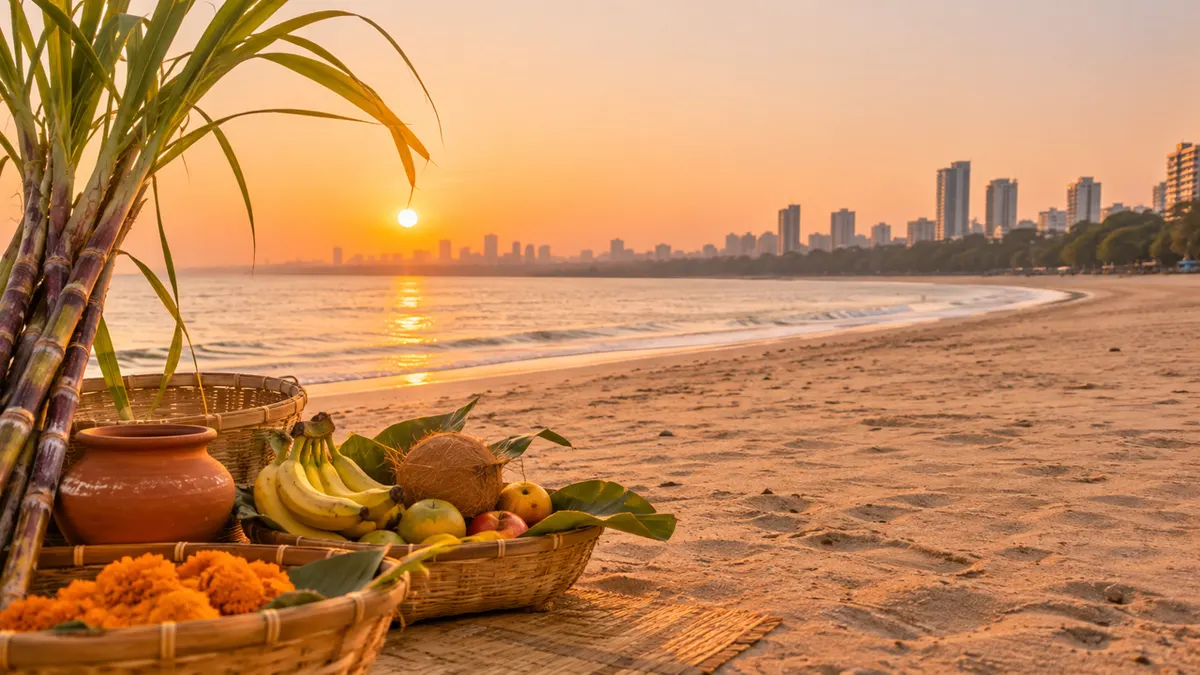
Court declines urgent permission
The Bombay High Court has declined to grant urgent interim permission to the Mithila Chhath Puja Sangh to hold Chhath Puja arrangements at Girgaon Chowpatty on November 15 and 16, 2026. A vacation bench of Justices Advait M. Sethna and Ranjitsinha Raja Bhonsale issued its order on November 9 after examining the refusal communicated by the local police and the existing judicial framework regulating events on the beach.
The court did not impose a general prohibition on celebrating Chhath Puja. Its narrower decision was to decline additional interim directions in this particular petition because the applicant had not satisfactorily addressed the monitoring committee requirements arising from earlier High Court orders. The matter is to be listed after the court reopens following the vacation.
How the dispute arose
The association sought permission to construct a stage and make arrangements at the South Mumbai beach between 3 p.m. on November 15 and 8 a.m. on November 16. The D.B. Marg Police Station had communicated an objection by letter dated September 17, 2026, following an application made earlier that month.
The police letter referred to a High Power Committee overseeing the site and stated that the permissible programmes were restricted to Ganeshotsav, Navratri Utsav, Ramlila, Krishnalila and Christmas, with other activities requiring permissions from relevant departments. This was the police position placed before the bench, not a fresh list of festivals independently created by the November 9 order.
The petitioner also said that a representation seeking the necessary permission had been sent to the Chief Minister on October 7. Its counsel informed the court that this representation remained pending. The court recorded that submission without directing the government to grant the request.
Earlier directions governing the beach
The State drew attention to orders passed in Adarsh Chowpatty Pragati Mandal and connected proceedings. In particular, the bench reproduced portions of an interim order dated June 21, 2018, regulating the use of a designated area for functions and limiting departures without express judicial permission.
An especially important direction required the court-appointed Monitoring Committee to be joined as a necessary and proper party in proceedings concerning permission for events or temporary infrastructure at the beach. The order also placed responsibility on the State and municipal corporation to bring that requirement to the notice of courts considering such matters.
When the bench asked counsel for the association about compliance with those directions, particularly permission from the committee and its presence as a party, counsel did not provide a satisfactory answer. That procedural deficiency was central to the refusal of immediate relief.
Article 25 and its limits
The bench also addressed Article 25 of the Constitution. It recognised the freedom of conscience and the right freely to profess, practise and propagate religion, while emphasising that the constitutional guarantee is expressly subject to public order, morality and health.
The observation matters because a request for space to conduct a religious ceremony may involve more than an abstract claim to religious freedom. It can also require compliance with site-specific environmental, safety and administrative controls, particularly where previous court orders already regulate use of a public location.
The ruling should not be read as holding that Chhath Puja itself threatens public order or health. The court did not make that factual finding. Rather, it declined urgent intervention in the circumstances before it, including the unaddressed requirements of the monitoring mechanism.
Alternative venue and next steps
The association asked the bench to direct authorities to provide an alternative venue. The judges expressly declined to express an opinion on that request and observed that the petitioner could pursue remedies available in law. No substitute site was ordered to be allotted.
The operative order states that the bench was not inclined to pass further directions at this stage and that the petition should be listed in due course after reopening. It also permits concerned persons to act on an authenticated copy of the order.
For organisers, the immediate practical lesson is that urgent relief involving a regulated public site requires attention to existing judicial directions, the proper parties and the permissions process. For public authorities, the order leaves the underlying representation and any legally available alternative arrangements to be dealt with through the appropriate channels rather than by an immediate judicial allocation.
Why the decision matters
This dispute illustrates the distinction between a constitutional right and the conditions governing use of a particular public venue. A religious observance may enjoy constitutional protection without automatically entitling organisers to erect temporary structures at a specific beach in disregard of a prior court-supervised framework.
Equally, the decision is interlocutory: it addresses urgent relief sought during the vacation, not a final determination of every possible permission route. The pending petition and any further administrative steps must therefore be followed separately before describing the dispute as finally resolved.
Case: Mithila Chhath Puja Sangh v. State of Maharashtra
Citation: Writ Petition (L) No. 37429 of 2026; order dated 9 November 2026
Bench: Justices Advait M. Sethna and Ranjitsinha Raja Bhonsale
Advocates: Jogendra Thakur for petitioner; Bibhishan Sutar instructed by Komal Punjabi for BMC; AGP Gauri Sawant for State
Constitution of India: Article 25
- Bombay High Court
- Chhath Puja
- Article 25
- Girgaon Chowpatty
- Religious Freedom