HC
Andhra Pradesh High Court Says Original DVR Footage Needs No Section 65B Certificate
Abhishek Nagle • Published • 4 min read
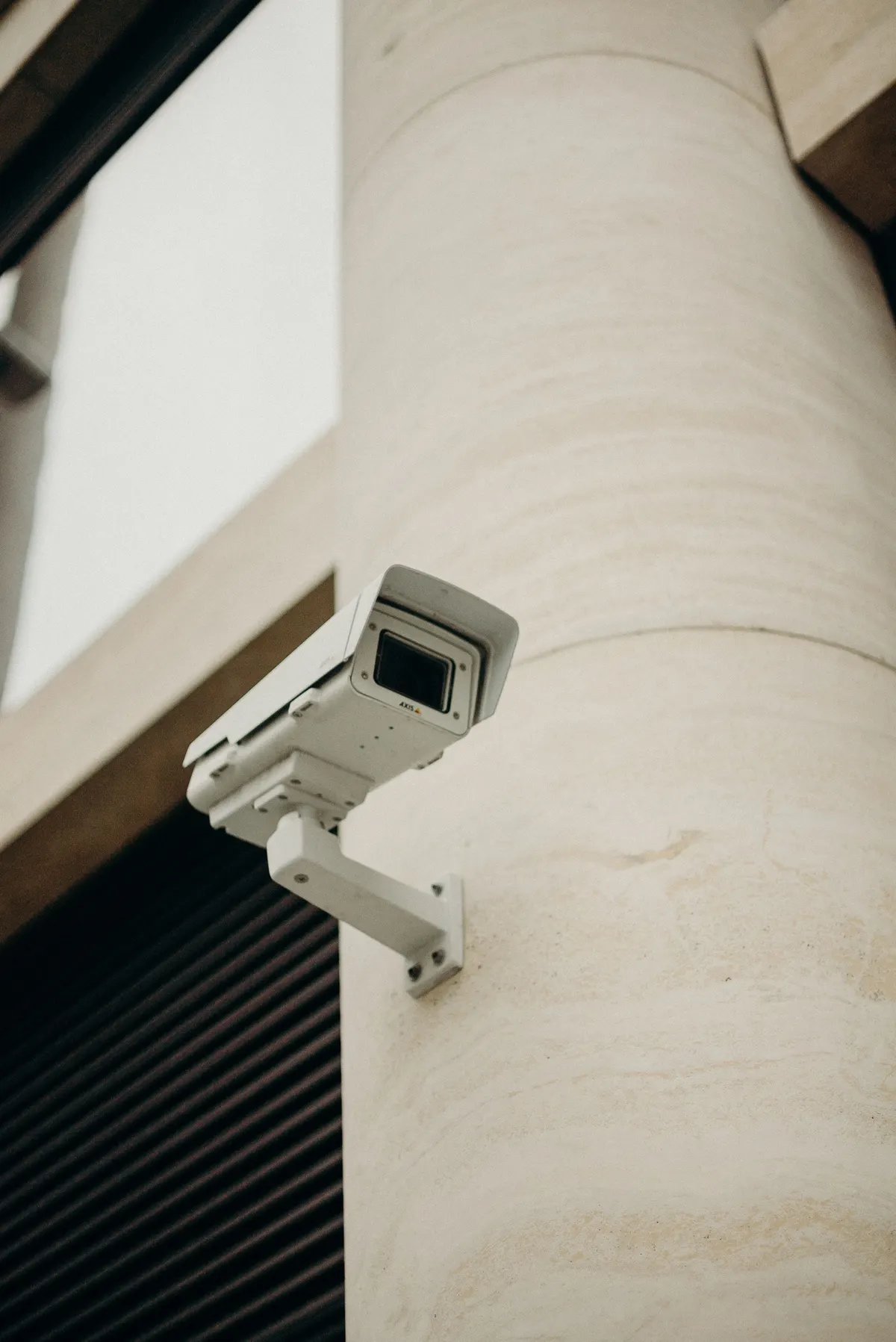
Key development: The Andhra Pradesh High Court has held that CCTV footage stored in the original DVR is admissible as primary electronic evidence without a certificate under Section 65B of the Indian Evidence Act, 1872, and has upheld the murder convictions of four men for a killing at a sweet shop.
Appeals partly allowed
A Division Bench of Justice K. Suresh Reddy and Justice Sumathi Jagadam decided five criminal appeals against a trial court judgment. The Court rejected the challenge to the CCTV evidence and upheld the convictions of Accused Nos. 1 to 4 under Section 302 of the Indian Penal Code, 1860 [now Section 103 of the Bharatiya Nyaya Sanhita, 2023], with life imprisonment. It set aside their convictions for criminal conspiracy under Section 120-B(1) IPC and acquitted Accused No. 6. The appeals were therefore partly allowed. The date of the judgment is Not available in the verified source, and the ruling was reported on 25 November 2026.
The murder and the recovery of the footage
The case concerns the killing of a real estate businessman at Balaji Sweet Shop in Sattenapalli. The prosecution said that disputes over real estate dealings gave Accused Nos. 1 and 2 a grudge against him, and that Accused Nos. 1 to 3 attacked him with hunting sickles and knives inside the shop while Accused No. 4, his assistant, waited outside. The post-mortem recorded 25 injuries. These are the prosecution's allegations as accepted by the courts below.
The police seized the original DVR, its adapter and the shop's television. With a technician's help, the footage was also copied to a DVD. The DVR (M.O.1) and the DVD (M.O.4) were produced before the trial court and sent to the Forensic Science Laboratory. A special court under the Scheduled Castes and Scheduled Tribes (Prevention of Atrocities) Act, 1989 tried five accused and sentenced them to life imprisonment with a fine of Rs 1,000 each. Proceedings against one accused had abated on his death.
Original record versus computer output
Section 65B of the Evidence Act [now Section 63 of the Bharatiya Sakshya Adhiniyam, 2023] deals with the admissibility of electronic records. The accused argued that the footage could not be used without a certificate under Section 65B(4). The High Court drew a distinction. Where the original electronic record or the original device holding it is produced in court, the certificate requirement does not arise merely because the record is electronic. The certificate is needed where a party relies on a computer output or other secondary electronic evidence.
Since the original DVR was produced and marked in evidence, the missing certificate did not make the recording inadmissible. The shop owner and the technician supported the seizure of the DVR and related items from the shop. Which earlier decisions the Bench relied on is Not available in the verified source.
Eyewitnesses, recoveries and conspiracy
The Court found no material contradiction in the eyewitness accounts, noting that the shop owner confirmed their employment and that the testimony survived a long cross-examination. The recovery of the sickle, knives and two motorcycles at the instance of the accused, together with the medical evidence, linked Accused Nos. 1 to 4 to the murder.
On conspiracy, the Court held that the delayed disclosure by the conspiracy witness and the absence of corroboration failed to show a prior meeting of minds, so the Section 120-B(1) convictions were set aside. As for Accused No. 6, it found no reliable or admissible evidence connecting him to the murder or the conspiracy and directed his release if he is not required in any other case.
Relief and practical significance
Accused Nos. 1 to 4 continue to serve life sentences for murder, and the Court granted them set-off under Section 428 of the CrPC [now Section 468 of the BNSS] for the time already spent in custody. Accused No. 6 is acquitted. For prosecutors, the ruling is a practical guide to proving CCTV evidence: seize and produce the original device, prove the seizure through witnesses, and avoid relying only on a copy. If only a copy or a printout is produced, a Section 65B certificate remains necessary.
The decision is by a Division Bench of the Andhra Pradesh High Court and is persuasive in other States.
Why it matters for exams
Relevant for Judiciary, CLAT PG, APO, AIBE and UGC-NET Law aspirants studying electronic evidence. Revision pointer: no Section 65B certificate is needed when the original device or record is produced; it is needed for copies and computer outputs.
Case Details
Case: Battula Srinu @ Mataye Kottu Srinu & Ors. v. State of Andhra Pradesh Citation: Not available in the verified source; reported on 25 November 2026 Bench: Justice K. Suresh Reddy and Justice Sumathi Jagadam Advocates: Smt. A. Swarupa Reddy, Dr. Challa Srinivasa Reddy, Sri B.V. Ram Naresh Kumar, Sri K.V. Durga Divakar and Sri S. Dilip Jaya Ram for the appellants; Additional Public Prosecutor for the State
Relevant Bare Act
Indian Evidence Act, 1872, Section 65B(4) [Bharatiya Sakshya Adhiniyam, 2023, Section 63]; Indian Penal Code, 1860, Sections 302, 120-B and 34 [Bharatiya Nyaya Sanhita, 2023, Sections 103, 61(2) and 3(5)]; Code of Criminal Procedure, 1973, Section 428 [Bharatiya Nagarik Suraksha Sanhita, 2023, Section 468].
- Section 65B Evidence Act
- CCTV Footage
- Electronic Evidence
- Original DVR
- Andhra Pradesh High Court
- Murder Conviction